Do Derelict Homes Really Attract a Premium?
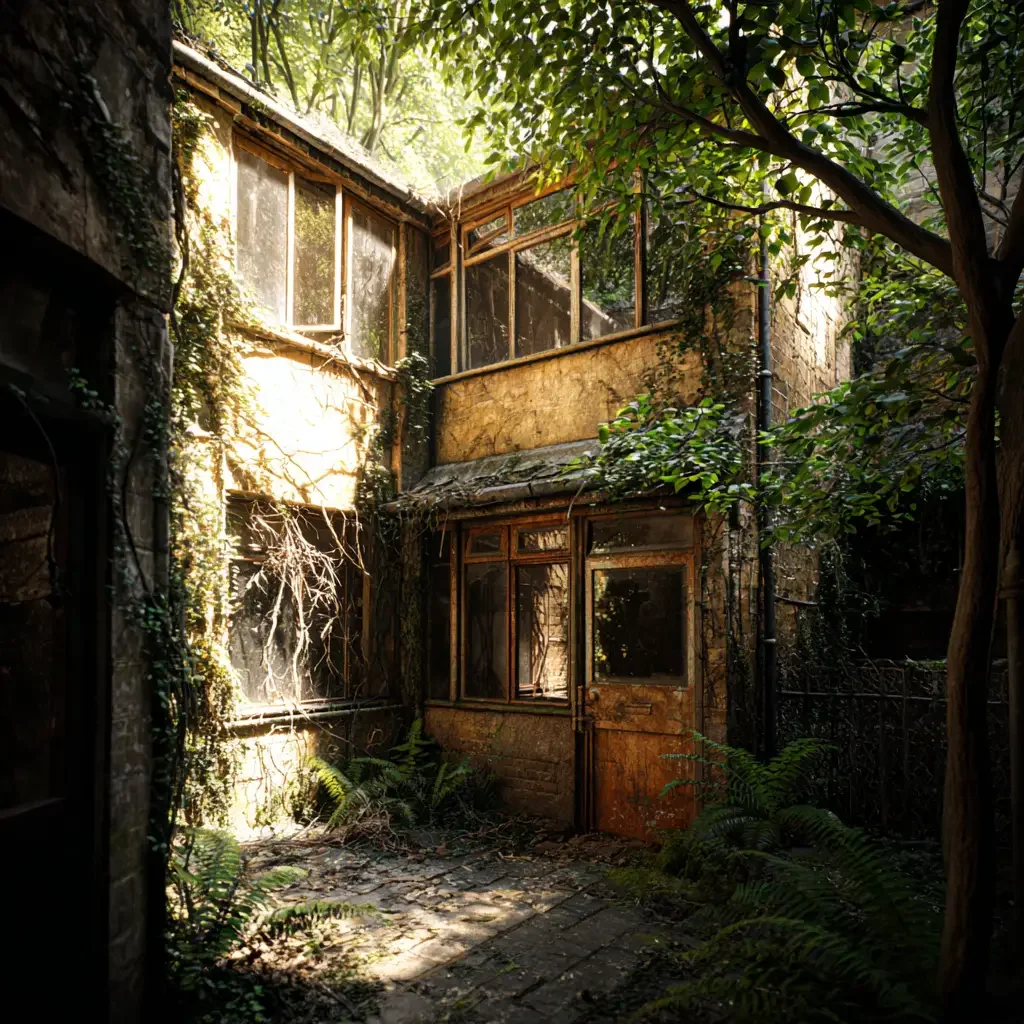
For lots of buyers, derelict homes carry a certain mythology, the “worst house, best street” opportunity to build a dream from scratch. But in today’s Sydney market, the value isn’t always the appeal of starting from scratch. More often, it lies in the land, the planning potential, and the feasibility.
The recent Bronte sale of a derelict house going for $835,000 over the reserve, is fundamentally a land play as explained by Ballast Point Director, Mat Wilk:
“The existing building has no real street presence, is single-storey, south-facing, and sits on a site with clear potential for a far bigger home. From a build economics standpoint, it’s seeming obvious that there’s more value in removing the existing structure than keeping it. The site would be worth more with the old building gone and a well-designed new home planned from scratch.”
BUT and this is where the market often misunderstands derelict homes, it’s not always as black and white as ‘knock it down’.
When the Derelict Structure Itself Has Hidden Value
Occasionally the existing building fabric has strategic value, particularly when it exceeds current planning controls.
A structure may sit outside today’s allowable floor space ratio
It may hold boundary offsets you can no longer replicate
It may have height, footprint or envelope advantages that a new build simply wouldn’t be approved for
Mat goes on to explain “in those cases, even a derelict shell can be more valuable standing than demolished, because it retains “grandfathered” planning benefits that buyers can work with. In that case it may be worth preserving.”
(This particular house did not have heritage or planning advantages, hence the clear value in redevelopment.)
Why Derelict Homes Appear to Sell for ‘Premiums’
Every few months, a headline appears claiming a derelict house smashed its reserve by hundreds of thousands. But insight from Matt Hayson of real estate agency CobdenHayson, suggests that there’s often more to it than that:
“Every now and then you’ll see a headline suggesting that a derelict home sold for $800k+ over reserve. It grabs attention, but you have to read between the lines. In most cases, those results don’t reflect a genuine premium for the property’s condition, they reflect a reserve that was set well below true market value.”
This kind of result often happens when a property has been held for a long time, typically inherited and the sellers aren’t across current market values. The reserve ends up being set on the cautious side, the location does the heavy lifting, and the competitive bidding simply brings the price back to where the market already was.
A few years ago, pre-COVID, the gap between renovated and unrenovated homes wasn’t as pronounced. Labour was easier to come by, build costs were predictable, and buyers were more willing to take on substantial renovations.
That landscape has changed. Construction costs, timelines, and risk have all increased, and with that, buyer behaviour is much different.
“Any seasoned builder or professional renovator is extremely cautious.” Matt goes on to say, “they’ll run hard numbers: purchase price + full build cost = end value. If the equation doesn’t leave daylight, they walk away.”
Even for builders with their own teams who can streamline the process internally, there’s still a limit to what makes sense. If the numbers don’t stack up, efficiency alone won’t solve the risk of overcapitalising. Premium Prices Now Follow Feasibility, Not Condition
When a run-down property sells for what looks like a “significant premium”, Matt is clear:
“It’s almost always because the property was priced well under market to begin with.”
He points to the recent Eastern Suburbs example:
Large, flat, 325sqm block
Double parking
Strong local resale values
So, in this particular case, the land value alone was around $3.9m. Nearby completed homes sit between the high-fives and high sixes. So, a $3m-plus build still fits within that market. The numbers justified the bidding
For Matt, that’s the real story:
“The block allowed the buyers to run the feasibility with confidence.
And when buyers assess derelict stock, their focus is laser-sharp on fundamentals:
Is the block easy to build on?
Is the position strong?
Is there parking?
What’s the aspect, elevation, or potential architectural upside?
If those fundamentals aren’t there, the buyer pool shrinks instantly — and any premium potential evaporates.”
So… Do Derelict Homes Attract a Premium?
Sometimes but not because they’re derelict.
They attract attention when:
the land is special,
the planning potential is strong,
the existing structure unlocks advantages that can’t be replicated, and
the price guide is sharp enough to draw competition.
Most of the time, what looks like a huge result is just the market correcting a low reserve on a fundamentally strong block of land. Buyers aren’t chasing an impossible dream throwing irrational money at derelict homes, they’re responding to proportionate value. A truly overblown price is actually uncommon, even in Sydney’s best suburbs. At the end of the day, feasibility dictates the outcome.
The derelict condition simply highlights the opportunity; the market does the rest.