When Getting Council Approval Became the Easy Part
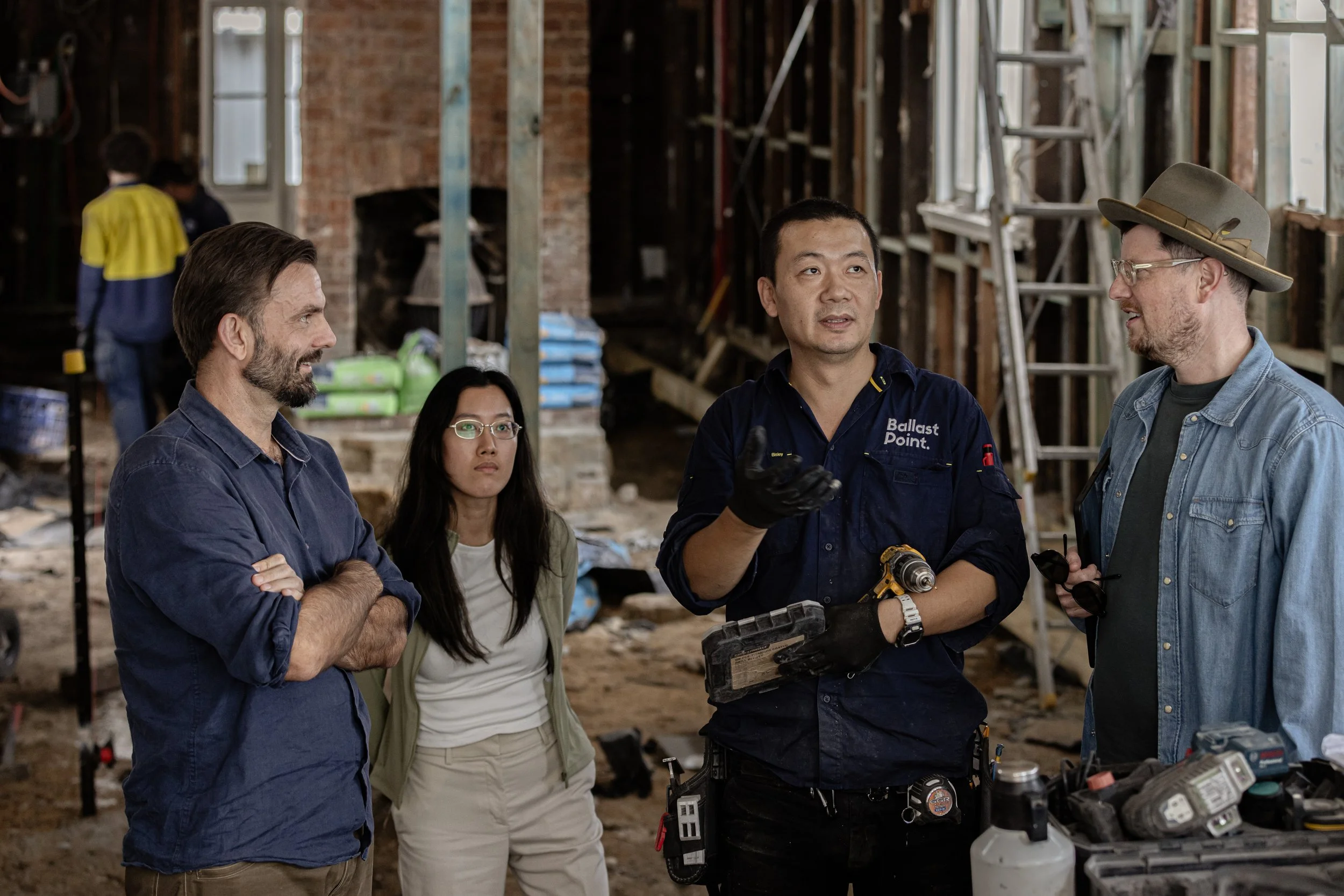
A conversation with an architect recently stopped me mid-sentence. We were talking through the challenges in his practice the kind of honest, off-the-record conversation that doesn't happen enough in this industry and he said something that stuck.
"Council's not really the problem anymore. Getting the thing built is."
It's a shift that's been happening quietly for years, but it's accelerating. And if you're an architect working in residential or mixed-use projects, you already know it. You feel it in the gap between what a client expects to pay and what builders are actually quoting. You feel it in the weeks — sometimes months — between a successful DA and a builder actually breaking ground. You feel it in the frustration of watching a beautifully considered design get value-engineered into something unrecognisable, not because of planning constraints, but because nobody involved in the design process had a real handle on what it was going to cost to build.
The Old Problem Wasn't This Problem
There was a time not that long ago when council was the great uncertainty. Getting a development application approved was the thing you lost sleep over. Once you had your DA, the path to commencement was relatively predictable. Builders had healthy margins, competitive tendering worked as it was supposed to, and three quotes on a project would give you a reasonable range to work with.
The levers for managing cost were intuitive, too. If a project was running over budget, an architect could make meaningful savings by adjusting material specifications. Swap the natural stone benchtop for engineered stone, simplify the joinery, pull back on the finishes. These decisions moved real money.
That world has changed.
What's Actually Happening Now
The most significant shift has been in where the cost sits. Labour has become the dominant factor in construction pricing, and it has escalated at a rate that has outpaced almost everything else in the building economy.
The cost of a site manager has more than doubled in the past six years. Skilled tradespeople are genuinely scarce; the generational transfer of trades the plumber whose kids became plumbers, the concreter whose apprentices came from the same community has largely broken down. There are fewer people in the trades, and those who are there can charge accordingly. Supply and demand, played out in real time across every job site in the country.
What this means practically is that the old levers no longer work. Changing from natural stone to engineered stone on a benchtop barely moves the dial on a budget, because the stone itself is only a fraction of the cost. The labour to cut it, install it, and finish around it is where the money is and that cost is the same regardless of what material you specify. The cost of a stone benchtop, in real terms, is actually cheaper today than it was a decade ago. It's everything around it that has changed.
So, the budget conversation with a client has become structurally more difficult. Early numbers get locked in before anyone has a clear picture of what the market will actually bear. Expectations form around figures that made sense at concept stage but have little relationship to what a builder will quote twelve months later. And when that disconnect surfaces, usually at tender return, it lands hard.
The Tender System Is Under Pressure
There's another dimension to this that architects in the thick of it know well. The traditional competitive tender model, three builders submit, one wins, the project proceeds, was built on an assumption that builders had the margin and the confidence to absorb the cost of tendering. That assumption is crumbling.
With so much uncertainty about what things actually cost, builders are either pricing with significant contingency (which produces sticker shock) or declining to price at all. The unpredictability of labour, supply chains, and subcontractor availability makes it genuinely difficult to put a number on a job twelve months out and stand behind it.
The result is that getting from DA approval to a signed contract with a builder and from there to commencement, has become the most contested and uncertain part of the entire project lifecycle. Not the design. Not the planning. The gap between approval and shovels in the ground.
The question an architect raised with me put it plainly: the challenge now is linking the design, the procurement process, and the builder's pricing together properly. Getting those three things to align, so a project can actually move forward, is what's keeping people up.
What This Means for How Projects Are Structured
The architects navigating this most successfully are the ones who are rethinking when and how builders and construction advisors enter the picture.
The old model treated procurement as something that happened after design was complete. Now, the projects that make it to commencement without a crisis are increasingly the ones where cost intelligence and builder input are brought in earlier. Not to compromise the design, but to anchor it in reality from the outset, so that the numbers a client sees at concept stage aren't wildly disconnected from what they'll see at tender.
Early contractor involvement changes the dynamic. When a builder or a construction advisor is engaged during design development rather than at the end of it the expectation mismatch that causes so much pain later becomes a much smaller problem. The brief is shaped by an understanding of what things actually cost to build, not just what they cost on paper.
It's not a new idea. But in the current environment, it may be the most important structural shift available to the industry.
A Note
Ballast Point works alongside architects, developers, and agents across the inner west and Sydney more broadly. Our ECI (Early Contractor Involvement) process is designed specifically to address the gap described above — bringing cost intelligence and construction expertise into the design process before it's too late to make it count.
If any of this resonates with what you're navigating in your practice, we'd genuinely like to talk. Not to pitch you something, but to have the kind of honest conversation that tends to be more useful than a brochure.