Renovating a Heritage Home in the Inner West: What's Actually Possible
A heritage listing, or a home within a Heritage Conservation Area (HCA), doesn't determine whether your renovation can happen, it determines how it needs to be designed. That distinction is the difference between a project that stalls at council and one that's approved on the first submission.
It's a misconception we hear often from homeowners across Balmain, Rozelle, Birchgrove and the wider Inner West: that a heritage-listed home, or one sitting within a conservation area, comes with a ceiling on what's possible. In practice, the constraint is rarely the heritage controls themselves. It's whether the design was conceived with them in mind from the outset.
Why Heritage Homes Stall and Why It's Rarely the Heritage Itself
Councils across the Inner West assess heritage renovations constantly. It's not unfamiliar territory for a heritage planner in Balmain or Leichhardt, a significant proportion of the local housing stock falls under a heritage listing or an HCA, and planners are well practised in assessing thoughtful, well-considered design against those controls.
Where projects lose momentum is almost always earlier in the process: a design developed without a clear understanding of what a heritage listing actually protects, documentation that doesn't anticipate what a heritage officer needs to see, or a Development Application (DA) lodged without any prior conversation with council. These are design and process issues, not heritage issues and they're entirely avoidable with the right architect engaged from the beginning.
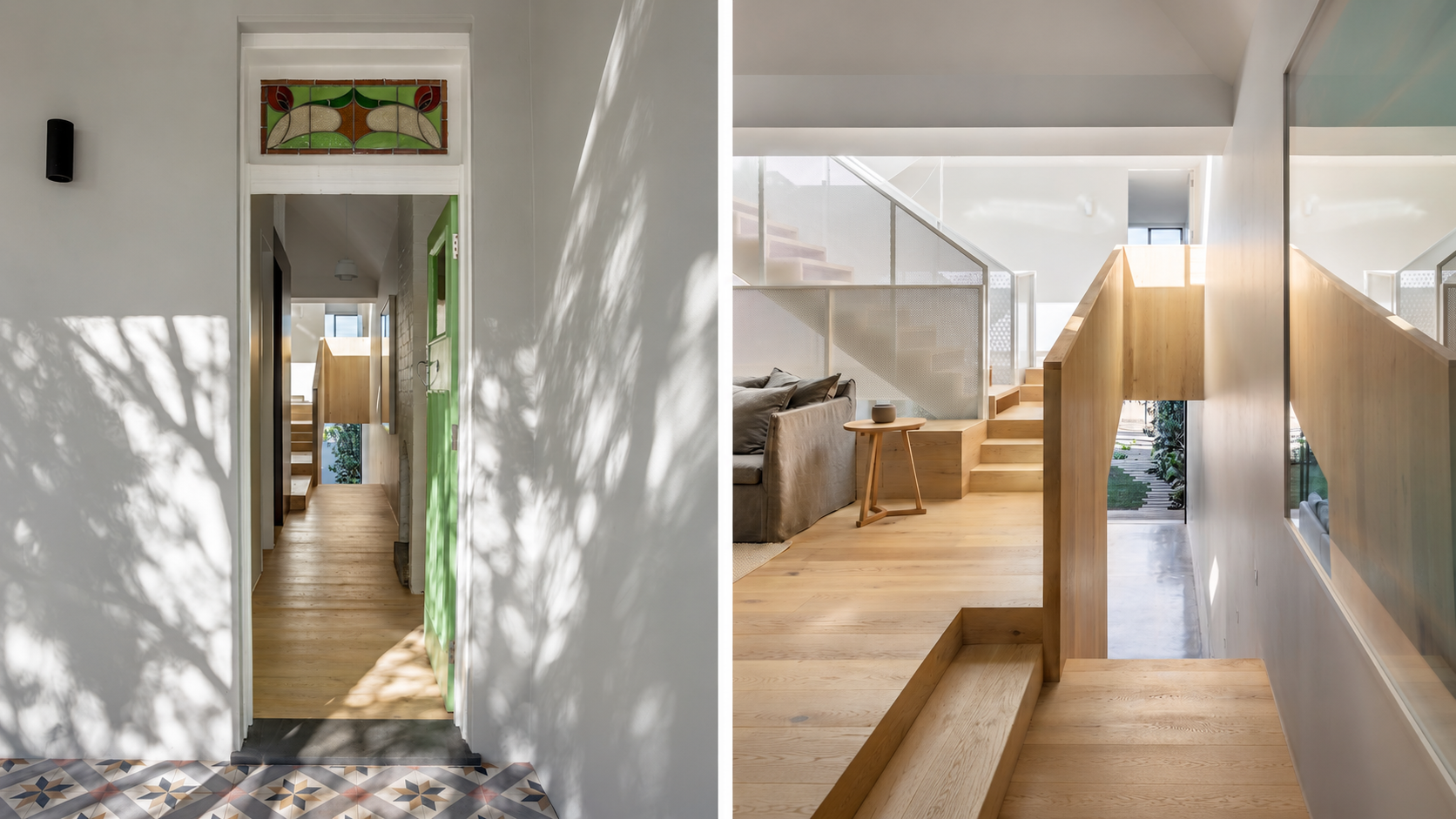
What Does "Heritage Architect" Actually Mean?
There's a natural assumption that a heritage architect holds a distinct qualification. They don't. Architect is a legally protected title in Australia in New South Wales, only someone registered with the NSW Architects Registration Board can use it. There is no separate registration for heritage work.
What distinguishes a heritage architect is depth of experience: a body of work built specifically around heritage-listed buildings, homes within conservation areas, and the particular judgement required to adapt older architecture with restraint. It's a reflection of track record, not credential.
Heritage Listed and Heritage Conservation Area Are Not the Same Thing
The two terms are often used interchangeably, but they carry different implications for design.
Heritage listing recognises a property's individual historical, architectural or cultural significance. What's protected varies considerably; sometimes it's the entire building, sometimes only the façade, original interiors, or specific architectural features. Understanding precisely what a listing covers is the first and most important step before any design work begins.
A Heritage Conservation Area operates on a different premise. Individual homes within an HCA are not necessarily heritage listed themselves; instead, council is protecting the character and streetscape of the neighbourhood as a whole. A renovation here is assessed on its contribution to that broader context, how it presents to the street, how it sits alongside its neighbours rather than on the heritage significance of the building in isolation.
Knowing which situation applies to a given property shapes everything that follows, from concept design through to what's realistic to submit to council.
Modernising a Heritage Home
Good heritage architecture was never about arresting a building in time. A heritage home can accommodate a considered contemporary kitchen, improved thermal performance, a reworked internal layout, additional living space and a well-resolved contemporary addition provided each of these responds to the architectural fabric it's being introduced into, rather than working against it.
The intent isn't preservation for its own sake. It's ensuring these homes continue to be genuinely lived in, by families whose needs look quite different to those the house was originally built for.
Heritage Architect or Heritage Consultant?
The two roles are distinct. A heritage consultant advises on a building's historical significance and may prepare supporting reports for a planning application, but is not necessarily a registered architect and, as with heritage architects, there's no formal NSW registration for the role either.
On more complex or sensitive projects, an architect and a heritage consultant typically work in tandem: the architect resolves the design, and the consultant provides the conservation advice that demonstrates how the proposal responds to heritage requirements. For many Inner West renovations, an experienced heritage architect is able to manage this scope without a separate consultant being necessary.
Choosing the Right Architect for a Heritage Property
Experience is the more useful measure here, rather than title alone. Worth asking:
Have they completed projects of a similar nature and scale?
Can they demonstrate comparable heritage renovations, not only new-build work?
Do they have a track record with the relevant council area?
Does their portfolio reflect the balance between heritage character and contemporary living you're looking for?
An architect's body of work will tell you more about how they'll approach a heritage property than any title ever could.
Our Approach at Ballast Point
A significant proportion of Ballast Point's work involves heritage-listed buildings, homes within Heritage Conservation Areas, and the considered renovation of older properties across Sydney's Inner West including Balmain, where heritage conservation shapes much of the area's architectural character.
Our experience has been built over many years of navigating this specific intersection: respecting the architectural significance of a home while designing spaces that meet the expectations of contemporary family life. It's this experience, rather than any formal designation, that defines what we mean when we describe our work as heritage architecture.
Frequently Asked Questions
Can a heritage-listed home be renovated? Yes. Most listings don't preclude renovation, they define which elements must be retained and how new work should respond to them. The scope of protection varies by property, which makes understanding the specific listing an essential first step.
Does a Heritage Conservation Area limit what additions are possible? Not inherently. Renovations within an HCA are assessed on how they contribute to the surrounding streetscape and neighbourhood character, rather than on the heritage status of the individual building. Considered extensions and additions are approved within HCAs regularly.
What defines a heritage architect? A heritage architect is a registered architect with substantial experience across heritage-listed buildings, heritage conservation areas and the sensitive renovation of older homes. It is not a separate professional registration.
What distinguishes a heritage architect from a heritage consultant? An architect designs the building and prepares architectural documentation. A heritage consultant provides specialist advice on heritage significance and conservation matters. More complex projects may draw on both.
Can a heritage architect assist with council approval? Yes. Experience with heritage planning brings an understanding of what heritage officers assess and how documentation should be prepared to respond to conservation requirements reducing the likelihood of delays or unnecessary redesign.
Is a heritage architect necessary for a home within a Heritage Conservation Area? Not a formal requirement, but working with an architect experienced in HCAs materially improves the likelihood that a renovation responds appropriately to planning controls and progresses through council efficiently.
Considering a Heritage Renovation?
Every heritage property carries its own considerations, and every council brings its own approach to assessing them. For homeowners across Balmain, Rozelle and the broader Inner West, the most valuable step is early advice before a design is developed that is never going to align with what's achievable.