Early Contractor Involvement Sounds Smart. In Practice, It Only Works With the Right Contractor.
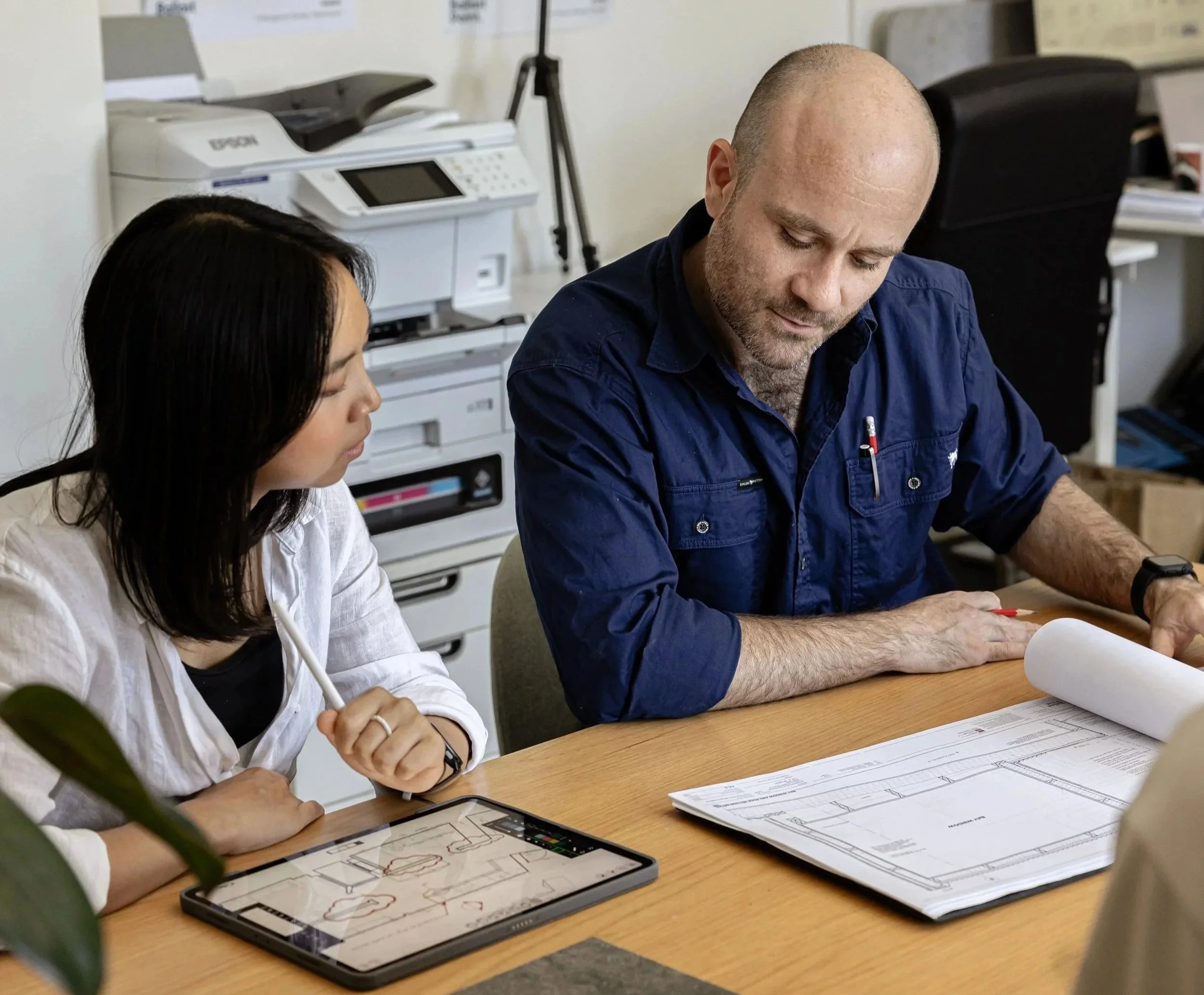
Inevitably, it's a contractor who understands design, and can read the architectural language, this contractor can help refine a design with intelligent adaptations that improve the build quality but maintain the architect’s intent, as opposed to just inflicting incongruent or clumsy build solutions upon the architect.
One of the clearest benefits of an integrated service is that construction input and buildability factors are taken into account during design, not after the fact.
That does not mean design gets watered down. It means the design is given the best chance of being built well.
The real opportunity is not to compromise architectural intent. It is to find small, negligible changes that do not materially affect the design, but have an outsized impact on cost, buildability, speed and quality.
At Ballast Point, our view is simple: the design should take primacy. The designer should have the freedom to produce the best possible floor plan first. Then, once that design is working, construction thinking can be overlaid to refine how it will actually come together.
That is where Early Contractor Involvement, or ECI, becomes so valuable.
What Early Contractor Involvement actually does
ECI brings construction thinking into the project before documentation is fully locked in.
It helps test how the design will be built, not just how it looks on paper.
Allows the project team to identify technical issues, buildability problems and documentation gaps early.
Gives feedback on cost, time, quality and construction sequencing while there is still room to act on it.
Helps make sure the client’s objectives are being delivered, not just the design in isolation.
In short, the earlier a project is reviewed through the lens of construction, the more opportunity there is to improve it without undermining the design.
Why ECI works
1. It protects the design rather than weakening it
Good ECI is not about builders imposing blunt changes to make their job easier. It is about preserving architectural intent while reducing unnecessary complexity in how it gets built.
Often the best improvements are minor adjustments that are almost neutral from a design point of view, but highly beneficial from a construction point of view.
Those small shifts can make the build simpler, faster, more cost-effective and easier to finish well.
2. It improves technical resolution before site starts
A set of drawings can look complete and still carry embedded discrepancies, technical mistakes or buildability issues. Those issues often sit quietly in the documentation until the team is on site and once they are discovered onsite, they become the client’s risk.
They slow the build down, frustrate the team and create unnecessary cost at the worst possible time.
3. It leads to better documentation, which leads to better pricing
Better builder input early on usually results in clearer, more technically resolved documents.
Better documents:
Lead to better pricing.
Better pricing leads to fewer surprises.
The problem is often not that builders cannot price the job. The problem is that they are pricing incomplete or unresolved information.
4. It de-risks the build
The biggest win with ECI is risk reduction. If the project has already been workshopped for buildability, a lot of avoidable friction has been removed before mobilisation. That means fewer delays, fewer reactive decisions and fewer expensive site-based problem-solving sessions.
When a site is costing thousands per day to operate, standing around resolving details that should have been dealt with earlier is a very expensive way to work.
5. It reduces friction getting to site
Builders are geared towards getting projects moving on site. Early involvement helps optimise the path to commencement.
It can improve sequencing, services coordination, structural logic and the practical handover from design to construction. It helps take friction out of the process before the job reaches its most time-sensitive and expensive stage.
Why the traditional process often creates problems
Too often, an architect develops the design, consultants add their documentation, and the project goes out for pricing without meaningful builder involvement along the way. At that point, unresolved issues are already embedded in the documents.
It is not really the contractor’s role at pricing stage to discover and resolve every hidden problem in the set. A contractor pricing the work can reasonably be expected to focus on preparing a price based on the information provided.
If the information is incomplete, inconsistent or difficult to build, those problems often do not properly surface until construction is underway.
That is when the cost of uncertainty becomes real.
Why pricing can vary so wildly without ECI
When documents are not fully resolved, pricing becomes inconsistent.
Builders make different assumptions.
They interpret risk differently.
They allow for different construction methods, different contingencies and different levels of uncertainty.
We recently spoke with a client who received three prices from the same documentation set ranging from under $4 million to over $5.5 million.
That kind of spread is not just a pricing problem. It is usually a documentation and risk problem.
ECI helps reduce that spread by improving the documents before pricing ever begins.
Where to apply ECI
The earlier the better
ECI is most valuable when it starts early.
Feasibility, pre-design and concept design are all strong points to bring in construction input. The earlier the review happens, the more chance there is to make smart changes without disrupting the design process.
But it is still useful at every design juncture
Once there is a working design, builder involvement can add value. It can be used to test structure, services, sequencing, access, buildability and likely cost implications.
Even if a project is already underway, earlier is better than never.
Especially where complexity is high
ECI is particularly useful for:
architecturally ambitious projects
renovations and additions
heritage projects
projects with tight sites or access constraints
projects with difficult services coordination
projects where budget certainty matters
projects where time, quality and client expectations need to be tightly aligned
What integrated practices do well
Integrated practices naturally bring design and construction thinking together earlier. Construction input can begin while the project is still taking shape, not once it is already fixed.
Cost, buildability, sequencing and delivery strategy can all be considered alongside the design.
That tends to produce a smoother path from concept to construction. But this model should not be limited to integrated studios.
How stand-alone architecture practices can benefit from ECI
Architects do not need to become builders to get the value of ECI. They can bring in the right contractor for early-stage involvement while retaining full control of the design process.
Used properly, ECI can support the architect, strengthen the project and improve the client experience.
It is a practical way to bring some of the benefit of an integrated model into a stand-alone architectural practice.
What makes ECI successful
Not every builder is suited to it
ECI only really works when the contractor understands design.
More specifically, they need to understand architecture and be able to read architectural language. They need to know how to look at a set of drawings and work out what actually matters in the design.
Without that, the suggestions can quickly become crude, literal or absurd.
The right contractor refines the design rather than fighting it
A good ECI builder is not there to reinterpret the architecture. They are there to help refine it so it can be delivered more effectively.
Their input should align with the architect’s intent, not cut across it.
They should be capable of identifying smarter ways to build what has been designed, not simply stripping back the ambition.
The wrong contractor can do real damage
At the other end of the spectrum, a builder who does not understand the architecture will often suggest changes that are completely disconnected from the design intent.
That is when ECI stops being useful and starts becoming disruptive.
ECI is hugely beneficial, but only with involvement from the right builder.
The real value of ECI
It creates better, more accurate documents.
It improves pricing accuracy.
It reduces build risk.
It removes friction before site starts.
It protects the design while making it more practical to deliver.
It helps align design, cost, quality and time before problems become expensive.
That is the real case for ECI. Not because it sounds collaborative.
Because it works.
Final thought
The goal is not to dilute design with construction constraints.
The goal is to let the design lead, then apply the right construction intelligence early enough to make that design easier to build, faster to deliver, more commercially sensible and less risky for the client.
For architecture practices and clients who value quality but also want greater certainty, that is where ECI has real power.
And it is why, in our view, early contractor involvement only works properly when the contractor understands architecture.
To find out more about how early contractor involvement might be able to support your project get in touch or book a call.